Feed on
Posts
Comments

The offer
Stay 6 Pay 4.
Sale Dates: 15 December – 31 March 2009  30 June 2009
Travel Dates: 15 January – 30 June 2009  30 September 2009 (Subject to availability at the time of booking)  
Blockout Dates: All properties: 19 – 30 September 2009 inclusive  * Stay/Pay now open for June/July School Holidays

Room Type Exclusions:  Heron Island: Point Suite, Beach House and Wistari Suites

By Steve Connor


Why are we asking this now?

There has been a spate of shark attacks on bathers swimming in Sydney, the most recent occurring on Sunday when a 15-year-old boy was badly injured. He became the third shark-attack victim in as many weeks. In one of the previous attacks a navy diver in Sydney harbour lost an arm and a leg after being savaged by a bull shark. The other attack was on a surfer using the city’s Bondi Beach whose badly severed hand had to be surgically re-attached. Local fishermen claimed that shark attacks are on the increase, aided by anti-pollution measures that have brought shoals of fish – and their natural predators – closer to shore.

Has there been an increase in shark attacks globally?

There is very little data to support the idea of a statistically significant increase in shark attacks. The recent instances from Australia get widely reported but there is no obvious trend which suggests that shark attacks are getting more common. In 2001, for instance, there was a wave of media reports about shark attacks around the world – it became known as the “summer of the shark”. There did appear to be a cluster of attacks at that time. However, when experts came to examine the figures at the end of 2001, the actual number of shark attacks and deaths for the year were down slightly on previous years.

Why are we hearing more about shark attacks?

It’s been a hot summer in Australia and that means a lot more people than normal are going swimming in the sea. The sheer increase in the number of bathers means that there is going to be a greater risk of a shark attack that gets reported in the media. In previous years, it was South Africa’s turn to be the focus of attention. The lurid nature of the attacks make for captivating stories, like that of the 77-year-old South African woman who was attacked by a great white shark during one of her regular morning dips. Nothing was left of her but a floating swimming cap.

How many people are attacked by sharks?

Worldwide, between 50 and 100 shark attacks on people get reported each year on average. Less than 10 of these prove to be fatal. Given that there are millions of people who go swimming in the sea each year, the risk of being bitten by a shark – let alone dying from an attack – is incredibly small. Indeed, the risk is equivalent to highly unlikely events such as death from lightning strike, bee stings or being fatally attacked by farmyard animals. In America alone the chances of death from drowning is about 550 times greater than the probability of dying from a shark bite.

What kind of sharks attack people?

There are something approaching 400 species of sharks and only 27 of them have been implicated in, or suspected of, attacking humans. The four most dangerous sharks are the great white (Carcharadon carcharias), the tiger shark (Galeocerdo cuvier), the bull shark (Carcharhinus leucas) and the oceanic whitetip shark (Carcharhinus longimanus). The great white – made infamous by the 1975 film Jaws – is probably more likely to encounter humans in cool, temperate regions off California, South Australia and South Africa. The bull shark is more of a problem in shallow coastal areas and tropical rivers, whereas the tiger is often seen around tropical oceanic islands. The whitetip is a more often found in open, tropical ocean.

Why do sharks attack people?

There is no easy answer to this question. The idea that sharks can become blood-hungry “man-eaters” fixated on human flesh is simplistic and almost certainly wrong. More than 95 per cent of shark attacks involve a single bite, which suggests that they are not the result of the shark engaging in the sustained hunt of a potential item of prey. Wounds are typically open-mouthed slashes or simple “nip-and-release” bites which, although devastating for the attacked person, represent relatively restrained behaviour on the part of the shark.

Some commentators have suggested that sharks often mistake swimming humans for natural prey species, such as seals or sea lions. But experts are not convinced, saying that great whites, for instance, are unlikely to confuse the sleek movements of a fast-diving seal with the surface flapping of a human swimmer. Great whites attack seals with a devastating initial bite that bears little resemblance to the almost gentle nibble they impart on their human victims – albeit leaving horrendous wounds. This has led some shark experts to suggest that an attack by a great white – which senses objects in its environment through its teeth – has more to do with an exploratory gnaw of a novel object rather than an outright assault on an item of food.

What can be done to lessen the risk of attacks?

Experts suggest not to swim or surf alone. Even the presence of a companion might deter a shark from attacking, and a friend would certainly help if you were attacked. Avoid swimming between dusk and dawn, when sharks feed most actively, and avoid swimming in an area where there has recently been a shark attack, or a shark longer than five feet has been seen.

Also, it is advisable to avoid swimming near river mouths after rainfall, as the silt flowing into the sea can attract sharks. Experts also advise swimming with goggles or a mask to see underwater so that you can watch the behaviour of fish and look out for any large sharks. This all applies to swimming in tropical or semi-tropical waters. Swimming in British waters – even on the rare occasions when it is warm enough to do so – poses little or no risk of shark attack.

What should you do if you are attacked by a shark?

In the unlikely event of this happening, it is important not to panic. It might seem easy to say this, but many attacks result in injuries that are readily treated, and it is important to keep a clear head. Do not try to incite a retaliatory strike on the part of the shark. Call for help and get out of the water as soon as you can, stemming the flow of blood by pressing a hand against the wound. Try to keep an eye on the shark to make sure to keep out of its way as best you can. If you survive, sell your story to a newspaper and offer the film rights to Steven Spielberg.

Are sharks really vicious animals that deserve no sympathy?

Their “aggression” is borne out of the evolutionary necessity to survive as one of the ocean’s top predators. Most species of sharks are threatened with extinction and they deserve our respect rather than our wrath. They have survived in the oceans for hundreds of millions of years yet never in their long history have they become so suddenly endangered.

When we reel in horror at the latest shark attack, we should spare a thought for a majestically beautiful animal that is likely to disappear if we don’t do something about shark fishing, pollution and climate change. For more information on sharks go to www.sharktrust.org .  ( and www.sharkwater.com )

Are we wrong to demonise the shark?

Yes
*Millions of us swim in the sea – on average fewer than 10 people are killed annually by sharks *There are around 400 species of shark. Of these a mere 27 have ever been involved in attacks *The shark is itself an endangered species. Every time it attacks it is fighting for its own survival

No
*Of all possible ways that a wild animal could attack a human, attack by shark is uniquely terrifying
*The water is the shark’s element, but not man’s. What goes on below will always be a source of fear
*The great white is the most feared shark for a reason. Not much of its victim is left when it attacks

courtesy of:  http://www.independent.co.uk

Good news from the GBR: Current bleaching status

Current bleaching status on the GBR

Current levels of coral bleaching across the entire Great Barrier Reef are still low. Reports of localised bleaching continue to be received for several reefs throughout the Great Barrier Reef region, and bleaching severity has increased to moderate levels at several sites. This patchy, localised bleaching continues to be consistent with the early stage of a widespread bleaching event but does not necessarily mean that more severe bleaching will follow.

Sea surface temperatures cooled over most of the Reef in January, most notably in the northern and central regions between Cooktown and the Whitsundays. Accumulated stress levels in some areas are just close to those known to cause coral bleaching, but current conditions are acting to reduce heat stress in most areas. Widespread bleaching remains possible if conditions change and heating resumes across the region. Areas that experience clear skies and calm weather in the latter half of February and early March will be especially at risk. The situation will continue to be monitored closely as the summer progresses.

Source: GBRMPA  http://tinyurl.com/br45dg

PAPUA NEW GUINEA  DIVERS ASSOCIATION updates their Environment and safety fee:

An Industry Support Fee

The Environmental & Safety Fee has been established for two primary purposes:

  1. To ensure the continued availability of a hyperbaric recompression facility in Papua New Guinea, help fund operating costs, training programs and to treat Papua New Guinean divers.
  2. To sustain and expand the capacity of the PNG Divers Association to participate in a range of programs and activities in support of ensuring implementation of the Environmental Code of Ethics, and the protection and management of Papua New Guinea’s unique marine bio-diversity.

The E&S Fee is US$5 / AU$5 / PGK12 per diver per diving day. The E&S Fee is NOT an insurance but rather an industry support fee.

Hyperbaric Health Australia (HHA) operates a Twin Lock unit maintained to international standards. This facility is centrally located at Port Moresby Medical Services with easy access to the country’s major dive locations. Port Moresby Medical Services is a private hospital with in-patient facilities for continuous patient care. PMMS also operates a medevac service ensuring prompt delivery of injured divers for immediate hyperbaric treatment.

Evacuation with nursing support for injured diver stabilization and oxygen therapy is arranged using pressurized jet aircraft.

As well as PNG, Hyperbaric Health operates chambers in  Australia and other locations throughout the Pacific and Asia.

In the event of a diving accident patients are accepted for treatment and HHA takes responsibility for insurance billing instead of charging directly at the facility. In the absence of any insurance coverage, the patient will be required to provide a guarantee of payment for services, prior to any treatment being conducted.

PNG Dive & HHA do not meet evacuation costs, which can be high. For this reason it is strongly recommended that divers in Papua New Guinea hold full medical and evacuation insurance.

Multimedia Book on the Great Barrier Reef


New multimedia book

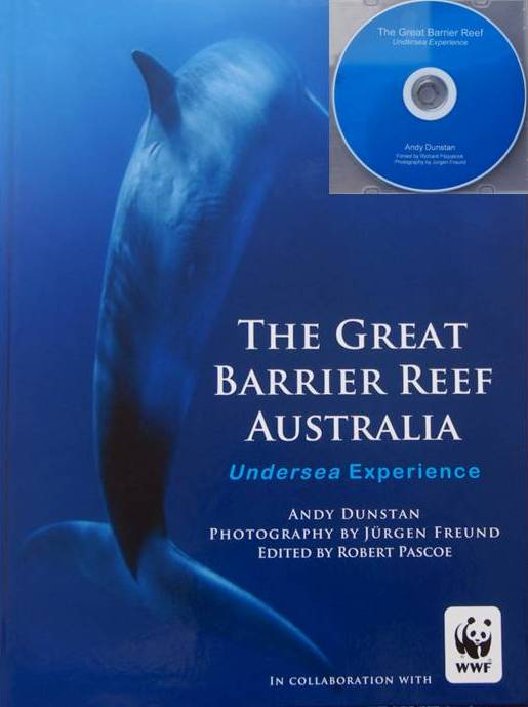
In conjunction with Australian Geographic Society, WWF and the Grollo Ruzzene Foundation; Andy Dunstan and Jurgen Freund are proud to announce the launch of their multimedia book

‘The Great Barrier Reef Australia Undersea Experience’.

Where and when:
Sydney: Tuesday 24th February, 7pm Australian Museum Theatrette. In conjunction a lecture from Ron and Val Taylor ‘Somewhere beyond the sea’ AG Society Members: $20 Non-members: $25

Townsville: Wednesday 4th March, 7pm Museum of Tropical Queensland. Free admission

The book and documentary film DVD showcase the remarkable projects of Undersea Explorer over the first 10 years of its operation. Shark capture, tagging and tracking; inspirational dwarf minke whale encounters and research, deep sea nautilus science, coral reef health and much more are a feature of the publication. Andy Dunstan tells the story of the unique experiences and conservation rewards for passengers, scientists, conservationists, photographers, film-makers and the staff of Undersea through their eyes and tales. The beautiful images of internationally acclaimed wildlife photographer Jurgen Freund highlight the book and are testament to his five years of close work with the Undersea projects. Footage from international award winning documentaries filmed in collaboration with Undersea by Richard Fitzpatrick and Digital Dimensions are the feature of the accompanying DVD.

As the researchers narrate their stories the viewer is immersed within the full ‘Undersea Experience’. ‘The Great Barrier Reef Australia Undersea Experience’ is at once a coffee table book and a motivational read. The story of Undersea is a testament to a new way for tourism to provide heightened wildlife experiences, allowing everyday people the opportunity to participate in some remarkable underwater adventures. It is also a text providing a unique formula for a change to the way science, tourism and conservation can combine to make a powerful contribution to saving our marine life.

This publication and the overall Undersea Explorer organisation were made possible by the philanthropy of the Grollo Ruzzene Foundation. This vision continues. The profits from this book will directly fund research and conservation projects for the Great Barrier Reef and Coral Sea.

The booked can be purchased for AU$ 80.00 a copy plus postage of AU$ 10.00 (in Australia) at  http://www.undersea-experience.com/


MATAVA Resort has just finished renovating and is inviting divers and non divers alike to experience Paradise without a big ecological footprint. Their Mix & Match packages cater for every interset and need. For more info: http://diversionOZ.com/en/fiji/matavaresort.htm

MIX AND MATCH PACKAGES
If you partner wants to learn to dive or just snorkel or explore the island and you are after the dive package,
just take the cost for each (as long as stays are matching)

prices per person (Valid to 31 March 2010) Twin/double
Single
7 nights Dive Package (10 dives)
7 nights accommodation in Oceanview Traditional Bure, all meals, transfers, 10 boat dives (2 tanks per day/5 dive days),free shore diving at CRITTER JUNCTION, traditional Lovo Feast and Kava ceremony
DIVERSION SPECIAL:
Get 8 nights pay 7, get 12 dives pay 10!
AU$ 1625

AU$ 1625

AU$ 2265

AU$ 2265

10 nights Manta Madness Dive Package (18 dives)
10 nights accommodation in Oceanview Traditional Bure, all meals, transfers, 7 days of 2 tanks diving, 1 day of 3 tanks diving, 1 night dive, free shore diving at CRITTER JUNCTION, traditional Lovo Feast and Kava ceremony
AU$ 2325 AU$ 3225
7 nights Learn to Dive Package
7 nights accommodation in Oceanview Traditional Bure, all meals, transfers, PADI Open Water Course (incl all equipment, OW manual, tables and certification), traditional Lovo Feast and Kava ceremony
AU$ 1649 AU$ 2285
7 nights Snorkel Fest
7 nights accommodation in Oceanview Traditional Bure, all meals, transfers, 4 dedicated boat snorkel trips, unlimited snorkelling at CRITTER JUNCTION, traditional Lovo Feast and Kava ceremony
AU$ 1245 AU$ 1885
7 nights Birding Treat
7 nights accommodation in Oceanview Traditional Bure, all meals, transfers, 3 guided birding treks, 1 dedicated boat trip to mangroves and seabird sites, traditional Lovo Feast
AU$ 1245 AU$ 1885
Upgrade package to Honeymoon Bure (7 N)
AU$ 120 AU$ 226
Extra night in Oceanview Bure
AU$ 170 AU$ 255
Extra dive day with two dives AU$ 160


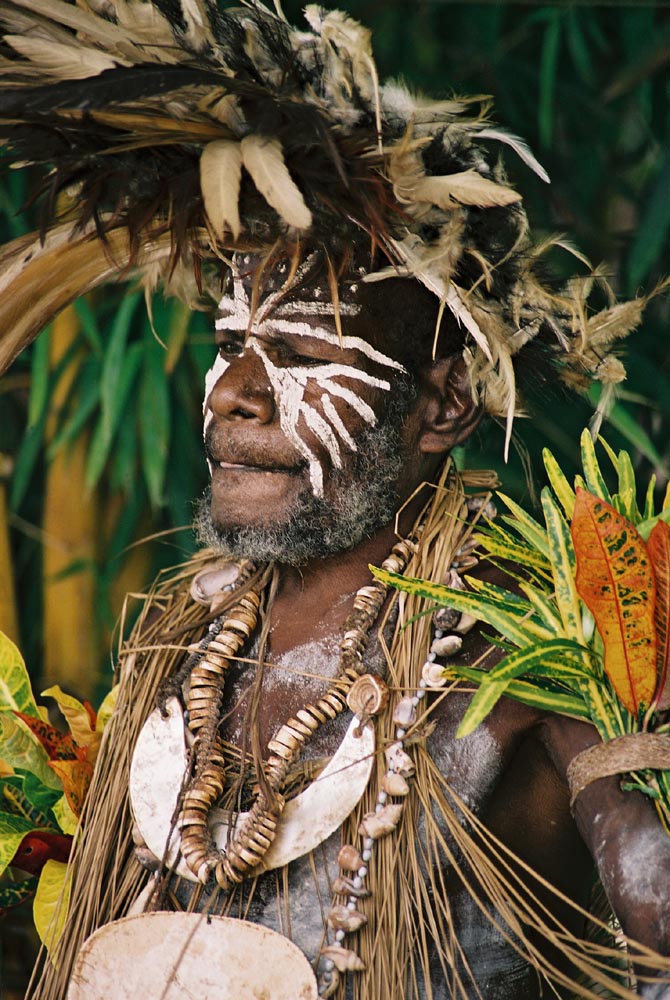
PNG Highlands woman
PNG Highlands woman
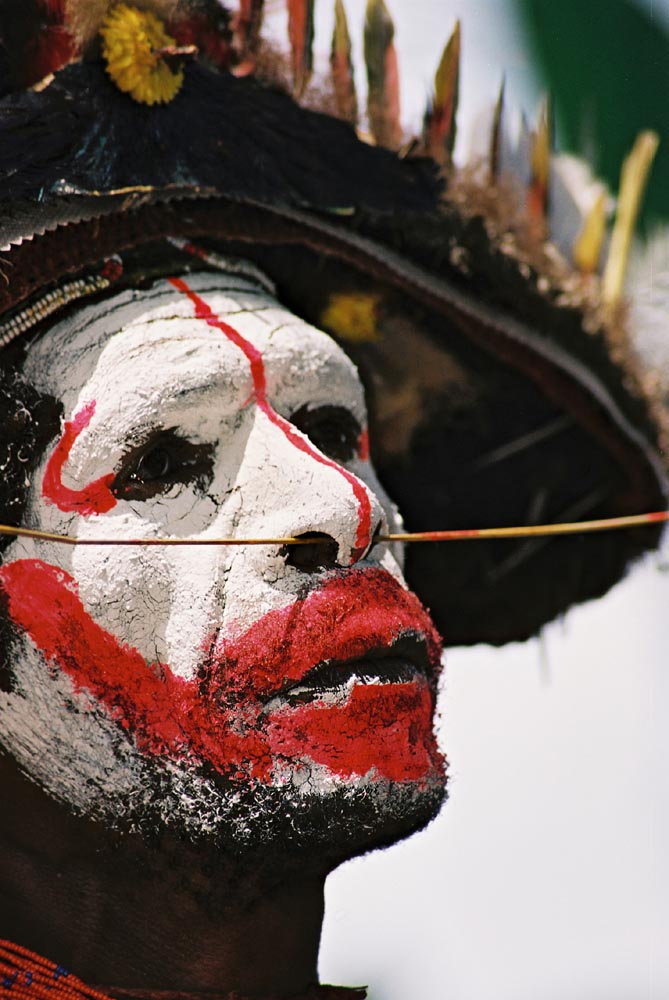
 Papua New Guinea men in traditional outfit
Papua New Guinea men in traditional outfit

“SING SING” is the name for those fantastic gatherings of Papua New Guinea people in their traditional outfits. Sing Sings happen on all sorts of family and tribal events during the year. However, there are some planned events where villagers gather to celebrate their culture.

If you are in PNG around those dates, don’t miss the shows!  

6  7  June Tufi Cultural Festival  

8   14  Jul  TolaiWarwagira,  Kokopo  

 15   18  Jul  National Mask  Festival,  Kokopo  

 16   17  Aug  Mt. Hagen Show

12-15 Sep Goroka Show

31 Oct – 1 Nov Morobe Show, Lae

6-8 Nov Canoe Festival, Milne Bay, Alotau

clown-fish_white_bwWe have just opened a presence on Twitter. find us on http://twitter.com/diversiondive to stay up to date with what’s going on at the HQ of Diversion Dive Travel

Meet the team and win!

At Oztek, the team from Diversion Dive Travel will look forward to meet a lot of their clients in person and introduce their agency to new clients. For free entry to the show visit the Diversion Website (http://diversionOZ.com ) and enter in a draw for two free VIP passes.

Once at Oztek (http://diveoztek.com.au ), stop by at their booth #’s 8 & 9.  Also at the booth will be the operators from Matava Resort in Kadavu – Fiji’s premier Eco Resort. Visit Nina, Claudia and Dirk and participate in the draw for a  7-night trip to Matava Resort, Kadavu, Fiji for two people courtesy of Matava Resort and Diversion Dive Travel.

The passion for the marine world and the multiple threats that endanger it’s long term survival has prompted the foundation of their on conservation activity: In October 2004 the DIVERSION MARINE CONSERVATION FUND was initiated. The aim is to support marine conservation and research projects which are being carried out in the regions of our dive destinations.

The Fund is financed directly, and it involves all clients of Diversion Dive Travel: With every dollar you spend on your dive booking you are making a difference. 1.5% of the profit from your bookings is being used to fund the projects of the Fund.


Projects assisted so far:

  • Tigershark research on the Great Barrier Reef
    The fund supported the ongoing research efforts of Undersea Explorer by financing a satellite tag to learn about migration patterns of tigersharks on the Great Barrier Reef.
  • Andaman Island Research boat for the Green Life Society
    The Green Life Society lost their research boat during the Tsunami the fund financed a replacement vessel which will be in operation June 2005.
  • Support of the Australian Marine Conservation Society to lobby the Australian Government to counter Japanese plans for increased whaling in the Antarctic
  • Mooring Drill for the Papua New Guinea Divers Association
    A replacement Drill and jackhammer was urgently needed to continue the successful mooring project throughout PNG
  • Support of the Australian Marine Conservation Society on their sustainable fisheries project. In particular for their 2006/07 campaign to stop illegal fishing activities in Australian waters.
  • Support of the Minke Whale Project Fund of the James Cook University.
  • Support the STOP SHARKFINNING ON THE GREAT BARRIER REEF campaign by AMCS


« Newer Posts - Older Posts »